
Week of Nov 3
Jarosz at the Harvard Linguistics Colloquium Talk Series
The second talk for Harvard Linguistics Colloquium Talk Series of Fall 2025 was given by Gaja Jarosz (UMass) on Friday October 24. The talk was titled ’Productivity and Lexical Specificity in Morphophonological Learning. Thank you so much for the great talk, Gaja!

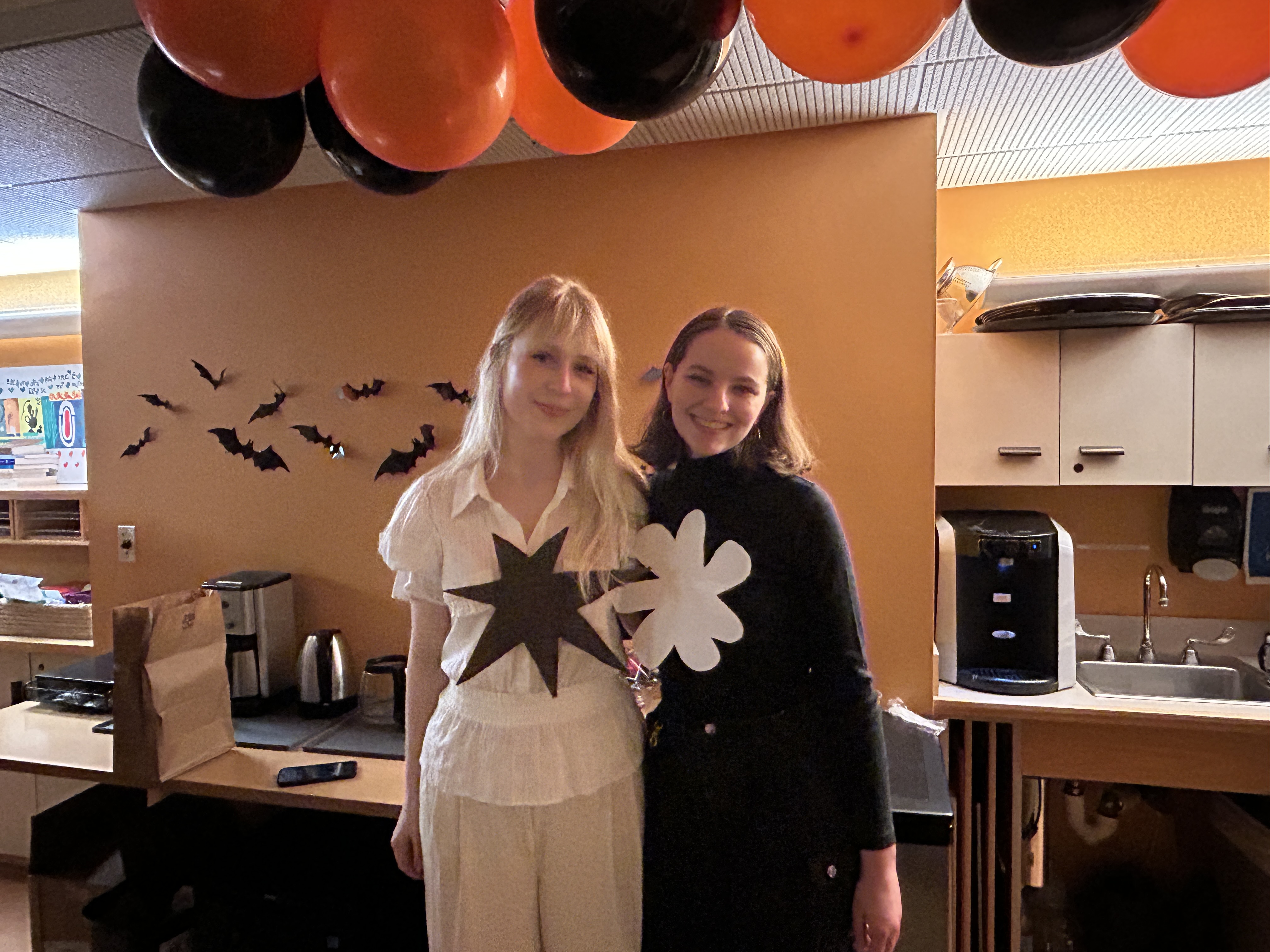
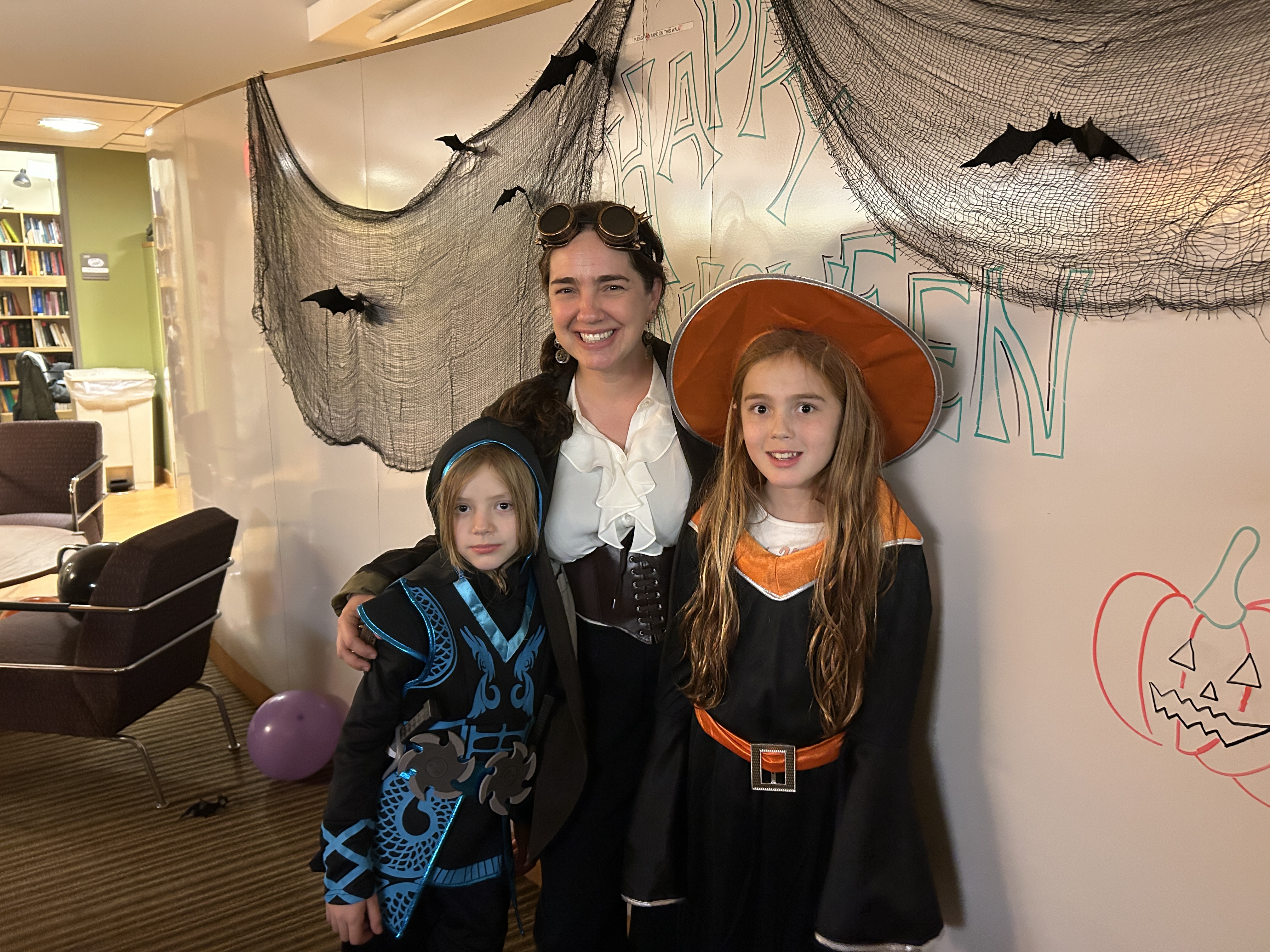
Halloween party!
The graduate students and faculties held a Halloween party on Thursday October 30th in the department lounge. A lot of cool linguistics-related costumes came up and feel free to guess what they are! Trick or treat~
We would all like to thank Hrefna for organising the event too!! It was great fun.



LangCog
The next LangCog meeting will be Tuesday, 11/04 from 5:30-7:00pm, in William James Hall, Room 1550. The speaker is Joe Coffey (ENS Paris), and the title and abstract of his talk can be found below. You can find the schedule for the remainder of the semester on the LangCog website. Food will be provided, as always.
Title: Mapping the global geography of childhood conversation
Abstract: Language is acquired within interactional frames, and yet the dynamics and social contexts of conversation differ across cultures. Our study utilizes recent advances in automatic speech processing to identify conversations children have with different participants from child-centered, daylong audio recordings. We analyze 23,000 hours of audio from 840 children (1-85 months, mean = 28 months) growing up in 13 countries, representing urban, agricultural, and foraging societies. Contrary to common assumptions, most of children’s conversations were not in dyadic contexts, but in multiparty contexts involving at least two other speakers. Dyadic conversation with an adult partner was relatively more common in communities from North America, Europe, and Israel. Dyadic conversation with another child was more common elsewhere, including all societies with reported engagement in subsistence agriculture or foraging. In addition, children with more siblings engaged in relatively more peer conversation and less adult conversation, while higher caregiver education predicted less peer conversation. Taken together, our findings represent the first foray into mapping the global geography of conversations in childhood.